
Fall Aeration & Seeding:
Everything You Need to Know
Your complete guide — how to get your lawn ready before we arrive, exactly what we do, and how to care for it afterward. Bookmark this page and come back to it any time.
Where Are You in the Process?
This page covers the whole season. Jump to whichever half applies to you right now.
Before We Arrive
- Mow your lawn to 2.5–3"
- Get flags and marking paint ready
- Mark irrigation heads and invisible fence once your date is confirmed
- Handle any soil prep you want done — we can't till or add soil
After We've Been
- Start watering — this is the part that matters most
- Skip mowing for one week
- Leave the soil plugs alone
- Know what's normal and when to expect green
Getting Your Lawn Ready
Two things to handle before your service date: mow it, and mark it.
Mow Before We Come
Mow your fescue lawn to 2.5–3" before our arrival.
Do not scalp the lawn or cut any lower than this. Cutting shorter can damage the existing turf in your lawn.
Soil Prep Is On You
Our teams will run over bare areas 2–3 times to help relieve compaction in those spots.
We are not able to till or add soil to bare spots. If you feel your lawn needs additional soil prep, please plan to have that done before our visit.
Marking Your Lawn
Our aerators punch 3–4" into the turf. Our teams cannot see what's buried under your grass — properly marking it is what protects it.
What needs to be marked
- Irrigation heads
- Valve boxes
- Invisible dog fence lines
- Robotic mower boundary lines
- Termite bait stations
- Sewer clean-outs
- Anything else in your lawn sitting below the turf line
How to mark it
Irrigation heads: turn on each zone and place a flag at every head. Our seeding crews cannot mark heads as they go — we have only 30–45 days to seed all of our customers, and stopping to mark would mean not reaching everyone in time.
Invisible fence & robotic mower lines: mark with paint every 24 inches along the entire buried line — in all locations, not just at the ends.
What We're Applying to Your Lawn
Three things, in one visit: core aeration, premium seed, and a starter fertilizer.
1 · Core Aeration
Our machines put 300–400 PSI on the aerator tines, which lets them pull a 2–4" plug in most lawns. If your lawn is extremely dry, the plugs will be shorter.
Core aeration relieves compaction and lets more air, water and nutrients into the soil — helping both your existing turf and the new seed build a deeper, healthier root system.
2 · Seed
Our seed is selected from the list that NC State tests and publishes each year, chosen for color, disease resistance and drought tolerance.
We buy certified and tagged seed — a guaranteed germination rate of 90% or greater and 0% weed seed.
Applied at 4–5 lbs per 1,000 sq ft, and 8 lbs per 1,000 sq ft on bare areas. Our teams know your lawn's size and apply at the correct rate.
3 · Starter Fertilizer
A granular fertilizer formulated to promote fall seed germination, blended with extra phosphorus to encourage root development.
It carries a patented polyon coating that feeds your lawn consistently rather than breaking down too quickly — lasting all the way through to your winter visit in November or December.
Your Fall Watering Plan
September through October 31. How quickly your seed germinates depends mostly on your ability to water — and both paths below lead to a healthy lawn.
Follow This Schedule for the Fastest Results
With an irrigation system — or if you can reliably move hoses and sprinklers around the lawn — fescue seed in optimal conditions (55–80°F with consistent water) will germinate in 15–25 days.
| Rotating irrigation heads | 15 min / zone |
| Fixed irrigation heads | 8 min / zone |
| Hand watering, hose & sprinkler | 15–25 min / section |
| Rotating irrigation heads | 20–25 min / zone |
| Fixed irrigation heads | 10–15 min / zone |
| Hand watering, hose & sprinkler | 20–25 min / section |
Morning is best for the first 15 days, but any time during the day is fine during the fall seeding season.
You're Not Alone — and You Shouldn't Skip This Service
More than half of our clients aren't able to water consistently during the fall and rely on rainfall alone. Please don't let that keep you from this service.
Your seed will still germinate, just more slowly. These lawns typically fill in gradually from September through the following spring, and we consistently see them take off once temperatures warm up in March.
Consistent natural rainfall in early fall will speed things along considerably.
Over the past 30 years we've seen good results on properties that never water at all — as long as you stay on your fertilizing and fall seeding program.
How to Water Well — the Rules That Matter
- Keep the seed and soil damp for the first 15–20 days. This is the whole game. Your seed will not germinate as quickly if the soil is allowed to dry out during this window.
- The schedule above is a starting point, not a rule. Water as much as it takes to keep your soil damp.
- Check soil moisture throughout the lawn daily and adjust your times and duration accordingly — different areas of your yard will dry at different rates.
- If you see standing water at any time, stop watering until it drains or evaporates, then return to the schedule immediately.
- Overwatering can kill new seed. Please manage your irrigation system carefully during this period.
- Don't worry about watering in the evening during this time. The new seed needs water and fungus pressure is low during the fall seeding season.
- The fall seeding window takes more effort than any other time of year. It's a few weeks of real attention that sets up your lawn for the next twelve months.
Mowing Through Fall & Winter
Watering is the biggest factor in your result. Mowing is the second.
Take a week off
Skip mowing any healthy areas of the lawn for one week after your service.
Skip thin or bare areas entirely until the seed has germinated and the new turf is tall enough to reach a mower blade set at 3".
Then mow at 3"
We recommend mowing your turf at 3" through the fall and winter seasons. The cooler temperatures let the turf be kept tighter, which allows for good airflow.
Don't let it get away from you
Do not let your turf reach 5–6" before the first mowing. Letting it get too tall will not help it.
Mowing when it first reaches 3–3.5" helps the new turf mature and develop before the cold winter temperatures set in.
What to Expect
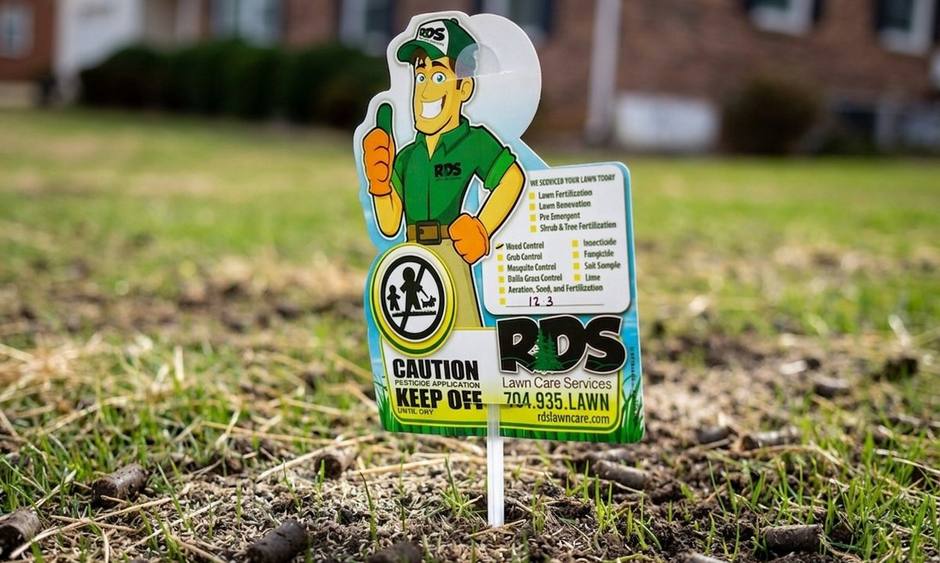
Soil plugs across the lawn
Those cores are the compaction leaving your soil — the entire point of the service. Leave them. They break down within a couple of weeks and the soil covers your new seed.
You can see seed on the surface
Expected. Seed is applied on top of the soil, not buried in it. As you water and the plugs break down, the seed works its way in.
The lawn looks thin and rough
You're seeing the ground between the grass plants — which is exactly why we seeded. It fills in as the new seedlings mature.
Some areas green up before others
Sun, shade, slope and sprinkler coverage all vary across a yard. Uneven germination across a single lawn is normal.
Germination Timeline
Fescue is slow to start. Weather and watering move these either way.
Fall Work. Spring Results.
Everything that makes a fescue lawn look good in April is decided in September and October. The plugs, the thin look, the daily watering — all of it is short-term work buying you a full season of thick, green turf.
Fall aeration and seeding is the single most important service in a fescue lawn's yearly cycle. Thank you for trusting us with it.
Stay with it through the fall. Your lawn will take it from there.
We Stand Behind Our Work
Since 1996.
Follow-Up Visits
If you feel your fall seeding isn't performing its best and needs some additional work on our part, we will be happy to come back and add seed to the bare areas of your lawn.
Just contact our office Monday–Friday, 8:00 a.m. – 4:30 p.m., or send us an email and let us know.
Frequently Asked Questions
Tap any question to open it.
Scheduling
When will my lawn be done?
Fall aeration and seeding for our fescue clients runs from mid-September through October 31 each fall, weather permitting. We work through neighborhoods in sequence, and the Friday before your visit we'll email you your exact service date.
Do I need to be home?
No. Just make sure your lawn is mowed, your irrigation heads and any buried lines are marked, and gates are unlocked so our team can reach the whole lawn.
Mowing
What are the mowing requirements during fall seeding season?
- Mow to 2.5–3" before our arrival. Do not scalp or cut lower — existing turf could be damaged.
- Take one week off from mowing healthy areas afterward. Skip thin or bare areas until the seed has germinated and the turf will reach a blade set at 3".
- Mow at 3" through fall and winter. Cooler temperatures let the turf be kept tighter, allowing good airflow.
- Do not let your turf reach 5–6" before the first mowing. Mow when it first hits 3–3.5" to help it mature before cold temperatures set in.
Marking & Damage
What items should be marked in my lawn?
Irrigation heads, valve boxes, invisible dog fences, robotic mower lines, termite bait stations, sewer clean-outs, and any items in your lawn below the turf line.
Our teams will not see these items in your turf, and RDS is not responsible for any items that are not correctly marked.
How exactly do I mark an invisible fence or robotic mower line?
Mark it with paint showing all lines for the system, every 24 inches, in all locations — not just at the ends.
If your system is marked that way and we hit your line, we will pay for the repair. We stay approximately 6 inches to 1 foot off any painted lines. If it isn't marked that way, we can't take responsibility for damage our equipment does.
Why can't your crew mark my irrigation heads?
We only have 30–45 days to seed all of our customers. To reach everyone promptly, our seeding crews don't have time to stop and mark heads as they go.
Flags can be purchased at Lowe's or Home Depot. The only items you need to flag are the irrigation heads in the lawn — turn on each zone and place a flag at each head. We will only repair heads our aerators hit if the system was properly marked.
Do utility lines need to be located before you come?
No. Under NC and SC law, aeration doesn't count as excavation, so utility lines don't need to be marked.
What if my phone, cable or internet service is hit during core aeration?
We realize the cable, internet and phone companies in our area do not bury lines deep enough in lawns. Improper burial can be a problem on some properties, and we're well aware of the issues it causes for our clients.
Our machines are designed to pull a plug 2–4" deep, and this is not considered digging by the utilities. If a utility has not buried its lines at least 12 inches deep, it is responsible for the repair.
If you find your service has been interrupted, please contact your service provider and let them know. They are responsible for the repair and for ensuring their lines are appropriately buried.
The Service Itself
What is being applied to my lawn?
Core aeration. A machine putting 300–400 PSI on the aerator tines, pulling a 2–4" plug in most lawns. Extremely dry lawns produce shorter plugs. This relieves compaction and lets more air, water and nutrients into the soil.
Seed. Selected from the list NC State tests and publishes yearly, chosen for color, disease resistance and drought tolerance. Certified and tagged, with a guaranteed germination rate of 90% or greater and 0% weed seed. Applied at 4–5 lbs per 1,000 sq ft, and 8 lbs per 1,000 sq ft on bare areas.
Starter fertilizer. A granular fertilizer formulated to promote fall germination, blended with more phosphorus to encourage root development. Its patented polyon coating feeds consistently rather than breaking down too quickly, and lasts until your winter visit in November or December.
Can you till my bare spots or add soil?
No. Our teams will run over bare areas 2–3 times to help relieve compaction, but we are not able to till or add soil. If you feel your lawn needs additional soil prep, please plan to have that done before our visit.
Watering & Results
When can I expect my seed to germinate?
It depends mostly on your ability to water. With consistent water and temperatures between 55–80°F, fescue seed planted in optimal conditions will germinate in 15–25 days. After germination it develops a deep root system through the winter and spring months.
Without reliable watering, germination is slower and more gradual — typically filling in from September through the following spring, then taking off once March warms up.
I can't water consistently. Should I skip this service?
No — please don't. More than half of our clients aren't able to water consistently during the fall and rely on rainfall alone.
Your seed will still germinate, just more slowly. Consistent natural rainfall in early fall speeds things along. Over the past 30 years we've seen good results on properties that never water at all, as long as you stay on your fertilizing and fall seeding program.
Can I overwater?
Yes — overwatering can kill new seed, so please manage your irrigation system during this period. If you see standing water at any time, stop watering until it drains or evaporates, then return to the schedule immediately.
The goal is soil that stays consistently damp, not saturated. Check moisture across the lawn daily and adjust your times accordingly.
Should I avoid watering in the evening?
Not during fall seeding. The new seed needs water and fungus pressure is low during this time of year, so evening watering is fine while you're establishing seed.
What if my lawn doesn't come in well?
Since 1996 we've always stood behind our work. If you feel your fall seeding isn't performing its best and needs additional work on our part, we'll be happy to come back and add seed to the bare areas of your lawn.
Contact our office Monday–Friday, 8:00 a.m. – 4:30 p.m., or send us an email and let us know.
Do I need to fertilize it myself?
No. The starter fertilizer we apply is formulated for fall germination and feeds consistently through to your winter visit in November or December. Adding a store-bought product on top of it can burn new seedlings.
Still Have a Question?
Call or email us. We'd much rather answer a question early than fix a problem later.
Happy with your service?
Reviews from neighbors are how families around Charlotte find us. If our crew took care of you, a quick word goes a long way.
Leave a 5-star review →Refer a friend
Know someone whose fescue could use this? You get $25 off, they get $25 off. No limit on how many neighbors you send our way.
Email us their details →